


How to Choose the Right Industrial Pump for Your Factory in Nigeria
Every single minute your production line stands still in Nigeria, your balance sheet bleeds capital. In the manufacturing landscapes of Lagos, Ogun, Kano, and Port Harcourt, operational continuity is not just a metric of success; it is a brutal daily battle.
Among all the heavy machinery that keeps your factory alive, industrial pumps are the silent workhorses. They move chemicals, transport food ingredients, circulate cooling water, manage toxic waste, and extract deep groundwater. Yet, they are frequently the most misunderstood and poorly specified assets in the entire plant.
Choosing an industrial pump is never a simple matter of looking at a catalog and picking a motor with high horsepower. In the Nigerian industrial market, making a decision solely based on the lowest upfront purchase price or an unverified recommendation is a direct path to premature mechanical failure, inflated electricity bills, and catastrophic production halts. To make a smart procurement decision, you must evaluate a complex mix of fluid dynamics, operating environment challenges, long term energy metrics, and engineering integrity.
This comprehensive guide serves as your strategic roadmap. Written from a practical, data driven perspective, it breaks down exactly how to evaluate your facility's fluid movement needs, counter local operational threats, and pick the perfect industrial pumping solution to protect your bottom line.
Is Your Factory Facing Costly Pump Failures? Do not let substandard equipment drain your operational budgets. Speak directly with our certified fluid engineers today to get a precise, custom assessment for your facility. [Request a Free Technical Consultation Today] >>> REQUEST A FREE TECHNICAL CONSULTATION TODAY <<< |
1. Analyze the Exact Properties of the Fluid
The fundamental law of pump procurement is that the liquid dictates the pump technology. Attempting to force a pump designed for clean water to move highly viscous molasses or abrasive chemical slurry will destroy the internal components within weeks. Before looking at any brand specifications, your engineering team must compile a comprehensive profile of the fluid being handled.
Viscosity and Flow Behavior
Viscosity measures a fluid's internal resistance to flow. Clean water has low viscosity, meaning it flows freely and easily. In contrast, lubricants, polymers, starch paste, and syrups possess high viscosity. As viscosity rises, the internal friction within the fluid increases significantly, which alters how a pump behaves. Centrifugal pumps work beautifully for low viscosity fluids, but they lose efficiency rapidly when handling thick materials. High viscosity fluids require positive displacement pumps, which use mechanical clearance adjustments to move fixed volumes of fluid regardless of the resistance.
Chemical Aggressiveness and pH Levels
The chemical makeup of the liquid determines the metallurgy and construction materials of the pump housing, impellers, and seals. If you are moving acidic process water in a food processing facility, or alkaline chemical solutions in a product manufacturing line, a standard cast iron pump will corrode rapidly. This causes dangerous structural leaks and product contamination. You must specify materials like high grade stainless steel, duplex alloys, or specialized plastic linings such as PVDF. This protects your system from chemical erosion.
Temperature Fluctuations
Industrial processes often run at extreme temperatures, whether it is boiling water in steam boiler feed systems or chilled glycol in cooling loops. High temperatures cause metal components to expand and change the physical characteristics of mechanical seals. Additionally, hot liquids are much closer to their vapor pressure point, which dramatically increases the risk of cavitation. Cavitation occurs when vapor bubbles form and collapse violently inside the pump, causing severe pitting on the impeller faces. Your choice must factor in the maximum operating temperature to ensure the seals and structural casings can handle the thermal load safely.
Solid Content and Abrasiveness
Will the pump move fluids that contain solid particles, sand, fibers, or crystals? Wastewater treatment plants, mining operations, and agricultural processing facilities routinely handle abrasive solids. Standard closed impellers will clog or wear down almost instantly under these conditions. For these jobs, you need pumps with open impellers, vortex designs, or heavy duty chopped maceration mechanisms that can handle solids without clogging or tearing up the internal machinery.
Unsure of Your Fluid Profile?Avoid guesswork that leads to burnt out motors and ruined seals. Let our technical experts analyze your process fluid properties to specify the ideal pump metallurgy for your plant. [Get Expert Help with Your Fluid Profile] >>> GET EXPERT HELP WITH YOUR FLUID PROFILE <<< |
2. Calculate Precision Hydraulic Requirements
A common and expensive mistake in Nigerian factory procurement is guessing the pump size or intentionally buying an oversized unit thinking it provides a safety margin. An oversized pump operates far away from its Best Efficiency Point, or BEP. This causes excessive internal recirculation, high vibration, early seal failure, and massive waste in electrical power. You must use precise calculations for Flow Rate and Total Dynamic Head.
Flow Rate Requirements
Flow rate is the volume of liquid your process requires the pump to move within a specific timeframe. It is usually measured in cubic meters per hour or liters per minute. Your production output quotas determine this number. For example, a brewery needing to transfer a specific batch of wort within a two hour window requires a clear flow capacity. Your specified pump must deliver this flow rate reliably while running at its optimal efficiency zone.
Total Dynamic Head
Total Dynamic Head represents the total equivalent height the fluid must be raised, factoring in all internal systemic resistance. It is calculated by adding three distinct values together:
· Static Head: The physical vertical distance the fluid must travel from the source liquid level to the highest discharge destination point.
· Pressure Head: The atmospheric or internal vessel pressure that the pump must overcome when pushing fluid into a pressurized tank or boiler system.
· Friction Loss: The resistance caused by fluid rubbing against pipe walls, passing through narrow bends, valves, strainers, and instrumentation checks.
Friction loss is highly dependent on piping diameter and layout design. Small pipe diameters combined with sharp ninety degree elbows create huge friction resistance, requiring a much larger pump. By calculating these three values accurately, you ensure your selected pump handles the entire system load without overloading the electric motor.
3. Match the Application to the Right Pump Architecture
Industrial pumps generally fall into two primary technology families: Centrifugal and Positive Displacement. Selecting the wrong type for your specific operational application will lead to immediate efficiency losses and frequent mechanical breakdowns.
Centrifugal Pumps: The Reliable Choice for High Volumes
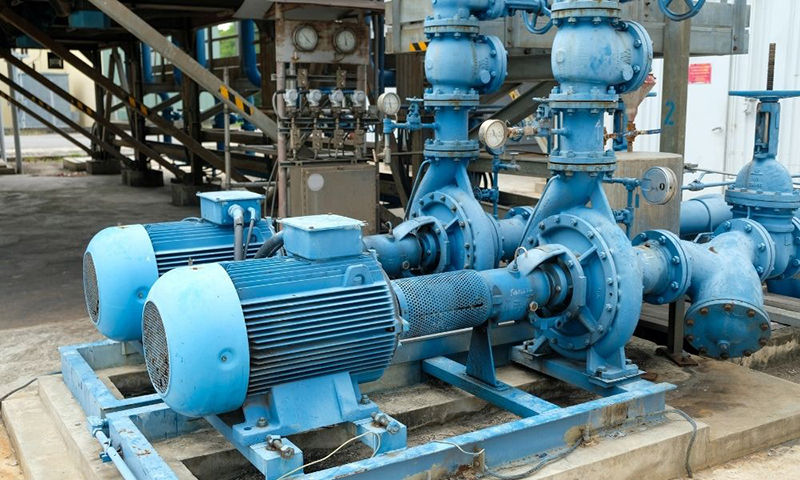
Centrifugal pumps utilize a spinning impeller to impart kinetic energy into the fluid, converting this velocity into pressure. They are the most common pumps found in factories worldwide due to their mechanical simplicity, lower initial purchase cost, and smooth, continuous discharge flow. They excel at moving high volumes of low viscosity liquids like clean water, light chemicals, and thin solvents. However, they are highly sensitive to changes in system pressure, and their flow rates drop sharply if the discharge head increases unexpectedly.
Positive Displacement Pumps: Engineered for High Pressure and Thickness
Positive displacement pumps move fluid by trapping a fixed volume within a cavity and mechanically forcing it through the discharge line. This family includes gear pumps, diaphragm pumps, progressive cavity systems, and piston pumps. These units deliver a constant flow regardless of changes in the discharge pressure. They are the ideal option for moving highly viscous materials, precise chemical dosing tasks, high pressure cleaning applications, and systems where fluid pressure varies constantly.
Submersible and Multistage Configurations
For factories relying heavily on deep groundwater wells for processing, or plants running high pressure boilers, specialized configurations are required. Multistage centrifugal pumps stack multiple impellers on a single shaft to boost discharge pressure to extreme levels. Submersible variants are engineered to run completely underwater, utilizing specialized waterproof enclosures. This eliminates suction lift problems entirely and provides a quiet, spacesaving solution for high capacity water supply.
Need an Exact Technical Match for Your Factory? Do not guess between Centrifugal or Positive Displacement technologies. Review your plant design with our application engineers to pick the exact configuration for maximum uptime. [ [Schedule a System Design Review] >>> SCHEDULE A SYSTEM DESIGN REVIEW <<< |
4. Confronting the Unique Nigerian Operational Environment
Industrial machinery operating in Nigeria faces a unique set of harsh environmental and infrastructure challenges. A pump design that works flawlessly in a temperature controlled European facility can fail quickly in Nigeria if local operating realities are ignored during the procurement process.
Power Infrastructure Instability
The Nigerian industrial power grid is known for severe voltage fluctuations, frequent phase imbalances, and sudden power outages. Because of this, many factories rely on large industrial diesel generators for primary or backup power. When generators cycle or load shifts occur, voltage surges can burn out standard pump motors easily.
To protect your asset, you must ensure the pump motor has a robust insulation class, typically Class F or Class H. It should also be paired with high quality external motor protection switches, phase monitoring relays, and Variable Frequency Drives. A VFD not only saves energy by adjusting motor speed to match actual process demand, it also acts as a safety buffer against incoming power surges and sudden voltage drops.
Water Quality Challenges
Groundwater and surface water sources across industrial hubs in Nigeria vary dramatically in quality. In coastal zones like Lagos and Port Harcourt, groundwater often has high salinity and elevated iron levels. In inland regions, water supplies frequently carry a heavy load of fine silt and sand sediment. High salinity causes fast galvanic corrosion in standard metals, while sand particles act like sandpaper on impellers and mechanical seals. Your pump specifications must include corrosion resistant materials and hard faced mechanical seals, like silicon carbide against silicon carbide, to survive these water conditions.
Ambient Temperature and Ventilation Factors
With ambient warehouse temperatures in Nigeria regularly exceeding thirty five degrees Celsius, pump motors run significantly hotter than they would in cooler climates. High ambient temperatures reduce the motor's natural cooling capacity, which can lead to automatic thermal shutdowns or internal insulation failure. When buying a pump, ensure the motor is properly rated for high ambient temperatures and positioned in a well ventilated space with plenty of room for cool air to circulate around the cooling fins.
5. Calculate Total Cost of Ownership Over Purchase Price
Many procurement departments fall into the trap of choosing the cheapest pump quote to save money on their immediate capital budget. This focus on upfront costs is a major financial mistake. The initial purchase price of an industrial pump typically represents less than fifteen percent of its total life cycle cost over a ten year operational period.
The real long term costs are hidden in energy bills and ongoing maintenance requirements. A poorly designed, cheap pump often consumes vastly more electricity to move the same volume of fluid as a premium, highly engineered alternative. Over years of continuous operation, that efficiency gap can add millions of Naira to your factory's utility bills, completely wiping out any initial savings on the purchase price.
Furthermore, low quality pumps require frequent replacement of mechanical seals, bearings, and impellers. Each repair requires buying parts and triggers an expensive production shutdown. Investing in a high premium pump brand with a proven efficiency rating reduces your monthly power bills, cuts maintenance work, and delivers a much lower Total Cost of Ownership over the life of the machine.
Stop Wasting Money on Cheap, Inefficient PumpsLet our engineering team run a complete Total Cost of Ownership calculation for your next pump purchase. See exactly how much power and maintenance cost you will save over time. [Request a [TCO Efficiency Calculation] >>> REQUEST A TCO EFFICIENCY CALCULATION <<< |
6. Avoid the Grey Market Trap in Nigeria
The Nigerian industrial landscape is flooded with grey market products, parallel imports, and outright counterfeit equipment. These units look identical to premium global brands on the outside, but they lack genuine manufacturer backing and use inferior internal components.
The Danger of Missing Manufacturer Warranties
When you buy a pump from an unauthorized source, you lose access to the official manufacturer warranty. If a critical component fails due to a design defect within the first few months of service, the grey market seller will rarely help you. You are left to absorb the entire financial loss of replacing the damaged machinery yourself.
The Backside of Spare Parts Availability
Industrial pumps require routine maintenance items like specialized O rings, specific oil seals, and replacement impellers. Authorized distributors maintain a large local stock of genuine spare parts to support their clients quickly. If you purchase a grey market pump, you will often find that standard local parts do not fit the parallel import version correctly. This leaves your plant waiting weeks for air freight shipping while production lines sit completely idle.
Access to Expert Engineering Support
Installing and tuning a large industrial pump requires deep technical knowledge. Authorized distributors employ factory trained engineers who understand how to align shafts, calibrate control panels, and troubleshoot complex system problems. When you buy grey market equipment, you lose access to this critical engineering support, forcing your internal maintenance staff to troubleshoot complex issues alone through trial and error.
7. Complete Step by Step Procurement Checklist
To protect your capital investment and ensure you select the perfect pumping system, require your engineering and procurement teams to complete this comprehensive step by step checklist before approving any purchase order:
· Fluid Properties Profile: Document the exact fluid chemical name, operating temperature range, specific gravity, viscosity, and solid particulate percentage.
· Hydraulic Calculations Audit: Verify the exact required flow volume and calculate the Total Dynamic Head, including full friction loss calculations for all valves and fittings.
· Pump Architecture Selection: Select either a centrifugal or positive displacement architecture based on the specific fluid viscosity and system pressure dynamics.
· Environmental Hardening Review: Confirm the electrical motor has a Class F or Class H insulation rating, and confirm the casing metallurgy is matched to local water quality.
· Total Cost of Ownership Analysis: Require a complete lifetime energy consumption projection to compare long term operating costs against the initial purchase price.
· Distributor Verification Check: Verify that the vendor is an authorized local distributor capable of providing an official factory warranty, genuine spare parts, and on site technical support.
Conclusion: Protect Your Factory Uptime
Choosing the right industrial pump for your factory in Nigeria is a strategic business decision that directly impacts your competitive edge, energy footprint, and bottom line profitability. By moving away from cheap, unverified equipment and focusing on precise fluid properties, detailed hydraulic math, local environmental protection, and authorized procurement channels, you protect your plant from unexpected breakdowns and ensure smooth, continuous manufacturing operations.
Do not leave your plant's fluid systems to chance or guesswork. Invest in proven engineering quality, prioritize long term energy savings, and build a relationship with a trusted local partner who can keep your production lines moving reliably for years to come.
Ready to Optimize Your Plant's Pumping Systems? Do not risk your factory's production targets on unverified hardware. Contact our authorized engineering desk today to schedule a full on-site pump system audit and technical consultation. [Contact Our Industrial Pump Engineering Desk Now] >>> CONTACT OUR INDUSTRIAL PUMP ENGINEERING DESK NOW <<< |
Comments